Danbooru
Login Posts Comments Notes Artists Tags Pools Wiki Forum More »
Listing Upload Hot Changes Help
A list of tags to help categorize this search. Space delimited.

Search

  • Help
guro
scat
furry -rating:g

Tags

  • ? kimono 354k
  • ? japanese clothes 545k
  • ? obi 110k
  • ? sash 205k
  • ? white kimono 60k
  • ? blue kimono 41k
  • ? print kimono 35k
  • ? black kimono 33k
  • ? yukata 33k
  • ? wide sleeves 372k
  • ? red kimono 28k
  • ? pink kimono 23k
  • ? purple kimono 22k
  • ? hakama 69k
  • ? floral print 132k
  • ? open kimono 20k
  • ? short kimono 18k
  • ? floral print kimono 14k
  • ? green kimono 15k
  • ? hakama skirt 47k
  • ? sleeveless kimono 11k
  • ? obijime 12k
  • ? furisode 10k
  • ? tabi 25k
  • ? zouri 14k

Options

Related

  • Deleted
  • Random
  • History
  • Discussions
  • Count
  • Posts Wiki Search »
  • Size
    • Small
    • Medium
    • Large
    • Huge
    • Huge
    • Gigantic
    • Absurd
    • Show scores
  • Edit

    和服
    • Pixiv
    • Twitter
    • Bluesky
    • Weibo
    • Lofter
    • Tumblr
    着物
    • Pixiv
    • Twitter
    • Bluesky
    • Weibo
    • Lofter
    • Tumblr
    小袖
    • Pixiv
    • Twitter
    • Bluesky
    • Weibo
    • Lofter
    • Tumblr

    A type of traditional Japanese clothing, consisting of a long, wide-sleeved robe, closed at the front forming a "y" shape. It is held closed with a wide belt-like sash called an obi. The sleeves can be tied back with tasuki.

    Kimonos are often worn with other traditional accessories, such as zouri (traditional wooden sandals), tabi (split-toe socks), and kanzashi (traditional hair ornaments). A kinchaku (small cloth drawstring bag) is often carried while wearing a kimono.

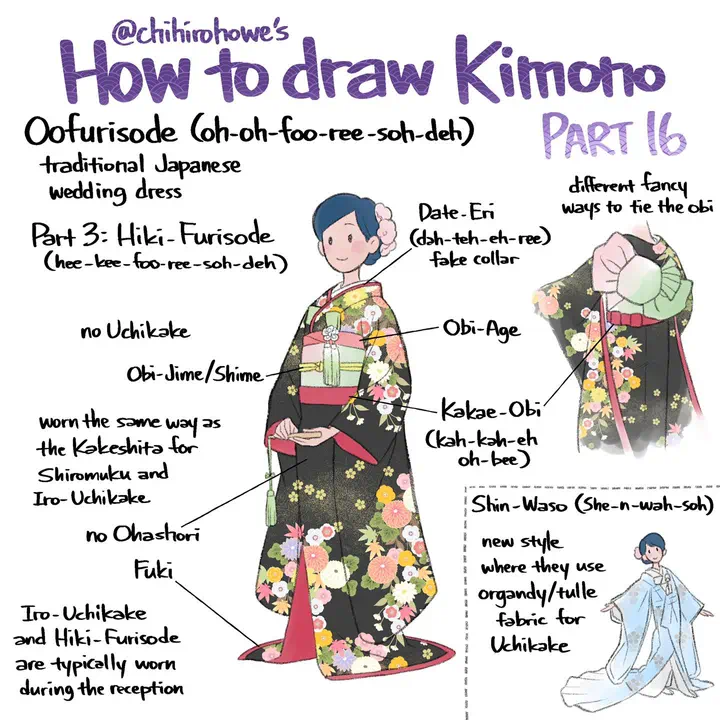
    Kimonos come in many different styles for different occasions. Yukata are worn during summer to summer festivals or to onsens. Furisode are formal kimonos worn by unmarried women. Uchikake and shiromuku are worn by brides during wedding ceremonies.

    Juban are usually worn under the kimono as the inner layer, and used by some as sleepwear.

    Of note, Kimono from the Sengoku Jidai onward are generally single-piece or layered robes tied with an obi. The Nibushiki Kimono, developed around the 1970s, is a more modern development with incorporates an obi with a two-piece shirt and dress and not considered traditional. If you are tagging a two-piece set of attire with a sash where the bottom-piece is not a hakama consider using hanbok or hanfu instead.

    Examples

    Normal kimono
    Furisode (new year clothing)
    Uchikake (formal, typically worn in weddings)
    Shiromuku (pure white uchikake)
    Hiki furisode (worn by bridesmaids during weddings)
    Yukata

    Related tags

    Components
    • Juban (underlayer)
    • Han'eri (constrasting collar)
    • Obi (waist sash)
    • Obijime (cord tied around obi)
    • Obidome (obijime accessory)
    • Obiage (material under obi)
    • Tasuki (sleeve ties)
    Types
    • Furisode (an unmarried women's kimono with floor-length sleeves)
      • Hiki furisode (a formal furisode for bridesmaids)
    • Layered kimono (an intricate Heian-era kimono)
      • Karaginu mo (a kimono for the Empress and royal ladies)
    • Kimono skirt (a short kimono with a skirt)
    • Funeral kimono (a black kimono worn at funerals)
    • Right-over-left kimono (a kimono with its right side folded over its left side, used for the dead)
    • Shiroshouzoku (a funeral kimono for the deceased)
    • Short kimono (a knee-length kimono)
    • Susohiki (a kimono worn by geisha and kabuki actors)
    • Uchikake (a wedding kimono)
      • Shiromuku (a pure-white wedding kimono)
    • Yukata (a light summer kimono for casual / normal days)
      • Short yukata (a knee-length yukata)
      • Bath yukata (a yukata for bath or shower)
    Colors
    • Aqua kimono
    • Black kimono
    • Blue kimono
    • Brown kimono
    • Green kimono
    • Grey kimono
    • Orange kimono
    • Pink kimono
    • Purple kimono
    • Red kimono
    • White kimono
    • Yellow kimono
    • Multicolored kimono
      • Gradient kimono
      • Two-tone kimono
    Styles
    • Backless kimono
    • Checkered kimono
    • Fur-trimmed kimono
    • Frilled kimono
    • Lace-trimmed kimono
    • Pinstripe kimono
    • Plaid kimono
    • Polka dot kimono
    • Print kimono
    • Ribbon-trimmed kimono
    • See-through kimono
    • Sleeveless kimono
    • Striped kimono
      • Vertical-striped kimono
    States
    • Kimono lift
    • Kimono pull
    • Torn kimono
    • Naked kimono
    • Open kimono
      • Hadanugi dousa
    • Kimono on shoulders
    • Shirt under kimono

    See also

    • Haori
    • Wa lolita
    • Ikou (kimono clothes hanger)
    • Tag group:Attire

    External links

    • Wikipedia: Kimono

    The following tags are aliased to this tag: kosode (learn more).

    This tag implicates japanese_clothes (learn more).

    The following tags implicate this tag: aqua_kimono, black_kimono, blue_kimono, brown_kimono, checkered_kimono, frilled_kimono, funeral_kimono, fur-trimmed_kimono, furisode, and 30 more (learn more).

    View wiki

    post #12009916
    post #12009907
    post #12009797
    post #12009779
    post #12009777
    post #12009704
    post #12009689
    post #12009550
    post #12009518
    post #12009418
    post #12009310
    post #12009291
    post #12009239
    post #12009144
    post #12009129
    post #12009039
    post #12008992
    post #12008759
    post #12008690
    1 759 760 761 762 763 764 765 766 767 17712
    Terms / Privacy / Upgrade / Contact /